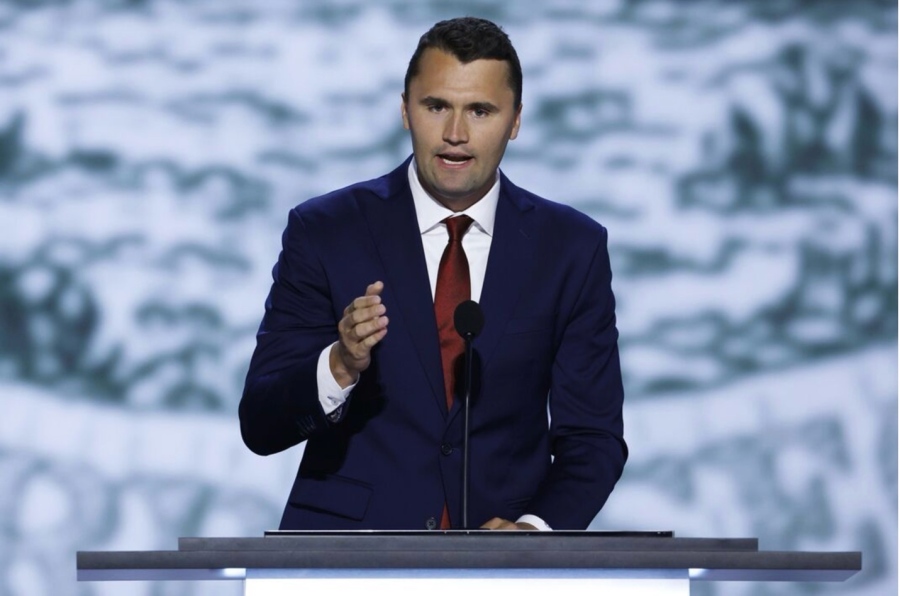
I write these words today not as a politician, not as a pundit, not as a talking head on television or a professor in some ivory tower. I speak to you as a nearly sixty-year-old American man who has walked through the fire of life: a Marine Corps veteran, a husband of forty-one years, a father of four, and a grandfather of six. I speak to you as someone who has lived long enough to remember an America where debate was fierce but civil, where words mattered but were not policed like contraband, where one’s neighbor might be a Democrat, a Republican, or something else entirely, and yet still your neighbor.
And today, I speak in eulogy for Charlie Kirk.
I am not here to canonize him. I believe Charlie himself would bristle at being turned into a saint or martyr. He was a man, with faults and flaws like any of us. He said things that drew anger and criticism, even among his allies. I am not here to defend every word that crossed his lips, because that would miss the point. What mattered about Charlie was not always what he said, but how he said it — how he fought, how he refused to let himself be silenced, and how he forced people, willing or not, to confront ideas in an age where ideas are increasingly treated as threats.
There is a tendency in America today to dismiss people with whom we disagree as unworthy of speech, to cancel, to ostracize, to smear. But Charlie stood in that storm, and he did not bow. That spirit — whether you agreed with him or not — deserves our respect.
His death leaves a hole, not simply in the ranks of conservative activism, but in the broader landscape of public discourse. Because love him or hate him, he was willing to stand up and speak, loudly, clearly, and unapologetically. He embodied something increasingly rare: the courage to engage.
As I reflect on Charlie’s life, I cannot help but reflect also on my own journey, and on the journey of America itself over the last thirty years. I remember the early 1990s, when I was a student at the University of Illinois. I served on the Student Faculty Senate in 1992, back when political correctness was still in its infancy. We were told that “speech codes” were necessary, that “offensive” words or phrases had to be eradicated. I fought those codes tooth and nail.
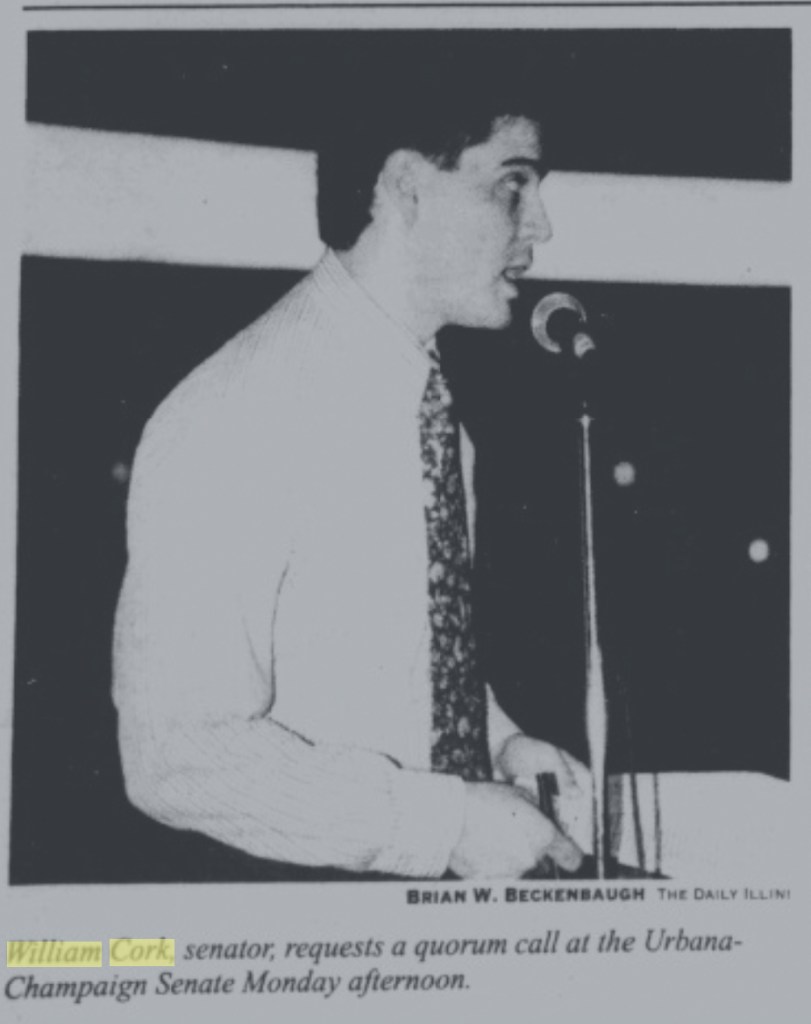
Charlie lived his whole career in that world. And while I do not agree with every phrase he uttered, I do sympathize with the struggle he faced: to speak freely in a society that punishes free speech. That is why we mourn today — not simply the passing of a man, but the ongoing loss of civil discourse in America.
When I enlisted in the Marine Corps, I swore an oath to support and defend the Constitution of the United States against all enemies, foreign and domestic. That oath did not expire when I hung up the uniform. It is etched in my heart, as enduring as the marriage vows I made to my wife more than four decades ago.
The Corps taught me discipline, loyalty, sacrifice. It taught me to value the man next to me — his courage, his effort, his willingness to bleed and sweat for something greater than himself. It did not teach me to ask where he was born, what color his skin was, or how he voted. It taught me to recognize him as a fellow Marine, a fellow American.
After my service, I completed university. I built a life. I worked, I raised children, I sent them to schools where I expected them to be taught how to think, not what to think. I raised them to love their country, to argue passionately, to stand up when the anthem played, and to bow their heads when prayers were said.
But somewhere along the way, I watched this country drift. In the early 1990s, I was at the University of Illinois, where the battles of today were already being sketched in miniature. Words were being outlawed, ideas labeled “unsafe.” I remember the smugness of the bureaucrats and professors who insisted that “free speech” was just a cover for bigotry. I fought that, not because I wanted to offend, but because I understood — as every thinking person understands — that when you silence speech, you enslave thought.
And then one day, in a graduate level class on the history of environmentalism (it was all that was available as an elective), I used the word “mankind” in a sentence. The professor stopped me cold. He said it was “sexist” and a form of “misogyny.” I laughed, because I thought he was joking. He wasn’t. He told me to leave the class. I left and never returned.
That moment, burned into my memory, was a harbinger of what was coming: a world where speech codes metastasized into HR departments, where political correctness evolved into DEI, where tolerance was redefined to mean enforced conformity.
Charlie Kirk was born into that very world — around the same time my two sons were born into it — and he made it his mission to push back. His style was not my own, yet I recognized in him the same fire I once carried into the UIUC Auditorium chambers at Illinois, pounding the table and insisting that the right to speak be preserved.
Charlie Kirk was a sharp mind and a compelling orator, but he was not the kind of polished intellectual adorned with a Harvard degree or a Wall Street pedigree. In fact, he sometimes stumbled in the rarified air of debates at places like Oxford. Yet that, paradoxically, was his strength. He was authentic. He was self-taught, an autodidact who never hid the rough edges. He was a husband, a father, and a kid from Illinois, like me, who rose from the ground up, determined that neither universities, nor corporations, nor bureaucrats would dictate what could be said in America — or who was allowed to say it.
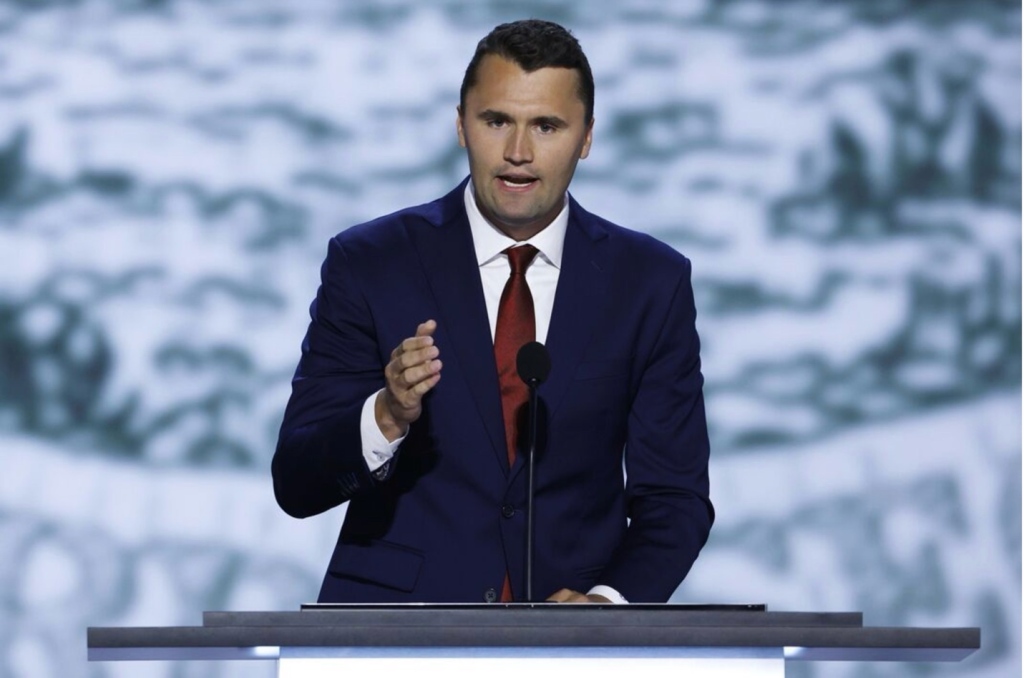
He founded Turning Point USA with little more than grit and determination. He built an organization that gave young conservatives a voice, often in hostile environments. He showed up on campuses where students were shouted down, jeered, sometimes even threatened — and he spoke anyway.
You didn’t have to agree with him to respect that, and many of his opponents did.
Too often in our country, people measure worth by credentials. “Where did you go to school?” “What degrees do you hold?” “What committees did you serve on?” But Charlie measured worth differently: by courage, by persistence, by willingness to debate. He wasn’t always right, but he was always there.
And he was unafraid of confrontation. In an age when people retreat to safe spaces, Charlie ran toward the fight. He wasn’t subtle, and sometimes his words were sharp-edged. But that was the point: he wanted to spark discussion, to jolt people out of their slumber.
In that sense, Charlie was a warrior of speech. I will not elevate him to martyrdom — that belongs to churches and saints — but I will say this: America is poorer without him. For every Charlie Kirk who dares to raise his voice, there are a hundred others who bite their tongues in silence, afraid of the cost of speaking freely. My prayer is that his passing will not be in vain, but that it might shift those odds, giving courage to more voices to rise.
When I was young, America was a place where neighbors argued across the fence. They argued about taxes, about civil rights, about foreign wars, about unions, about religion. But they also shared beers after work, mowed each other’s lawns when one was sick, watched each other’s kids play outside when one parent couldn’t and came together on the Fourth of July to watch fireworks. Debate was not war; it was part of citizenship.
But something has changed. Over the last thirty years, the very fabric of civil discourse has unraveled. Political correctness, once a punchline, has become doctrine. DEI has institutionalized division, teaching people to view each other not as individuals but as categories: oppressed or oppressor, privileged or marginalized. Multiculturalism, once sold as a celebration of diversity, has devolved into the rejection of a shared national identity.
I have lived long enough to see conversations shrink, not expand. Today, people are afraid to speak at work, afraid to post online, afraid even to talk at the dinner table. Words that once sparked debate now end careers. Humor is censored, curiosity punished, dissent demonized.
I know this not only from observation but from bitter experience. In 2021, while serving at the Mississippi Development Authority, I wrote a simple Facebook post criticizing a Biden Administration proposed policy on childcare subsidies. My argument was plain: government preference for subsidizing institutional childcare might benefit businesses, but it distorted the market for families who chose to raise their children at home. I wrote that the traditional, two-parent, biological, conflict free family ought to be recognized as the best environment to raise children — not dismissed or penalized in favor of arrangements that placed career or lifestyle above parenting.
That single post was treated as a crime. My colleagues filed complaints. I was directed to take the post down. The State Personnel Board launched an investigation. I had done nothing illegal, but to keep my job, I was compelled to sit through twelve hours of “sensitivity training.” I agreed, not out of contrition or because I was worried about losing my job, but because I wanted to see firsthand what the one-on-one counseling would say and what they were putting other people through. What I discovered was exactly what I expected: a pile of jargon, ideological dogma dressed up as sensitivity, and no serious engagement with the substance of my original point.
This, I say plainly, is un-American. Because America was built not on conformity but on conflict — the healthy conflict of ideas, the robust clash of opinions, the marketplace of thought. To shut that down is not to progress; it is to regress into tyranny.
Charlie fought against that. Again, I do not claim his every word was perfect. Just as I’m sure not every word I have said or will say is perfect. But I sympathize with his battle, because it is my battle too.
To be an American is not to be perfect. It is not to be free from sin or error. To be an American is to live in a country where you are allowed to stumble, to fall, to speak, to argue, to rise again. It is to live in a nation forged by liberty and bound together by shared principles, not by tribal bloodlines.
Being American means believing in the right of the individual — to speak his mind, to worship his God, to defend his family, to pursue his dreams. It means respecting the Constitution, not as an old piece of paper, but as a living covenant with those who came before us and those who will come after us.
Being American means standing for the flag, not because your country is flawless, but because it is yours. It means loving your neighbor, even if he votes differently. It means understanding that freedom comes with responsibility, and that liberty requires courage.
To be un-American is the opposite. It is to demand conformity and to silence dissent, to divide people into categories and identities rather than recognize them as individuals. It is to desecrate the flag, to mock the very idea of nationhood, and to brand free speech itself as dangerous. It is to erode the foundations of self-government by surrendering authority to bureaucrats, to ideologues, or to foreign interests — whether they come from Ukraine, Israel, Russia, or any other land that is not our own
I have stood against un-American forces all my life — on foreign soil as a Marine, and on our own soil as a citizen. Charlie Kirk stood against them as well, in his own way. For that, I honor him.
So where do we go from here? How do we restore civil discourse in America?
First, we must reclaim education. Schools must teach history honestly, literature broadly, and debate openly. They must stop policing words and start training minds. If a student uses the word “mankind,” the response should be a discussion, not an expulsion.
Second, we must model courage. Children learn not from slogans but from example. If we hide our opinions, they will learn to hide theirs. If we speak respectfully but firmly, they will learn to do the same.
Third, we must reject the false idols of DEI and multiculturalism. Diversity has value only when it is rooted in unity. Without a shared American identity, diversity becomes division. We must return to the idea that we are Americans first — from many backgrounds, yes, but united under one flag.
Fourth, we must cultivate humility. Debate is not about destroying your opponent but sharpening your own understanding. Too many today treat politics as war, not conversation. We must relearn the art of listening, of admitting when we are wrong, of finding common ground.
Fifth, we must defend free speech relentlessly. This means standing up in workplaces, in schools, in communities, and refusing to be silenced. It means protecting even speech we dislike, because the alternative is no speech at all.
If we do these things, we can honor Charlie Kirk not by idolizing him, but by carrying forward the spirit of his fight.
Charlie Kirk is gone. A voice, sometimes sharp, sometimes brash, always bold, has been silenced by an assassin’s bullet. But in his life, he reminded us of something too easily forgotten; that speech matters, that debate matters, that courage matters.
I write these words as a Marine, a father, a husband, a grandfather, and I mourn his passing. But I also mourn what America has lost over these past three decades: the ability to argue without hatred, to disagree without destruction, to be citizens together in the great experiment of liberty.
Let us not waste this moment. Let us not reduce Charlie to a slogan or a symbol. Let us instead take from his life a challenge: to speak honestly, to listen openly, to live boldly as Americans.
For in the end, that is what matters. Not whether you agreed with Charlie Kirk, but whether you will carry forward the fight for freedom of speech, freedom of thought, and the right of a free people to govern themselves.
That is what it means to be American. That is what Charlie, in his own imperfect way, stood for. And that is what we must continue to defend — for our children, for our grandchildren, and for the generations yet unborn.
Rest in peace, Charlie.
Discover more from Bill Cork
Subscribe to get the latest posts sent to your email.
 Bill Cork
Well said my friend. We as Americans have to take a stand, but with love and respect for our fellow man.
LikeLiked by 1 person
Outstanding!
LikeLike