Tag: politics

Eulogy for Charlie Kirk
I write these words today not as a politician, not as a pundit, not as a talking head on television or a professor in some ivory tower. I speak to you as a nearly sixty-year-old American man who has walked through the fire of life: a Marine Corps veteran, a husband of forty-one years, a father of four, and a grandfather of six. I speak to you as someone who has lived long enough to remember an America where debate was fierce but civil, where words mattered but were not policed like contraband, where one’s neighbor might be a Democrat, a Republican, or something else entirely, and yet still your neighbor.
And today, I speak in eulogy for Charlie Kirk.
I am not here to canonize him. I believe Charlie himself would bristle at being turned into a saint or martyr. He was a man, with faults and flaws like any of us. He said things that drew anger and criticism, even among his allies. I am not here to defend every word that crossed his lips, because that would miss the point. What mattered about Charlie was not always what he said, but how he said it — how he fought, how he refused to let himself be silenced, and how he forced people, willing or not, to confront ideas in an age where ideas are increasingly treated as threats.
There is a tendency in America today to dismiss people with whom we disagree as unworthy of speech, to cancel, to ostracize, to smear. But Charlie stood in that storm, and he did not bow. That spirit — whether you agreed with him or not — deserves our respect.
His death leaves a hole, not simply in the ranks of conservative activism, but in the broader landscape of public discourse. Because love him or hate him, he was willing to stand up and speak, loudly, clearly, and unapologetically. He embodied something increasingly rare: the courage to engage.
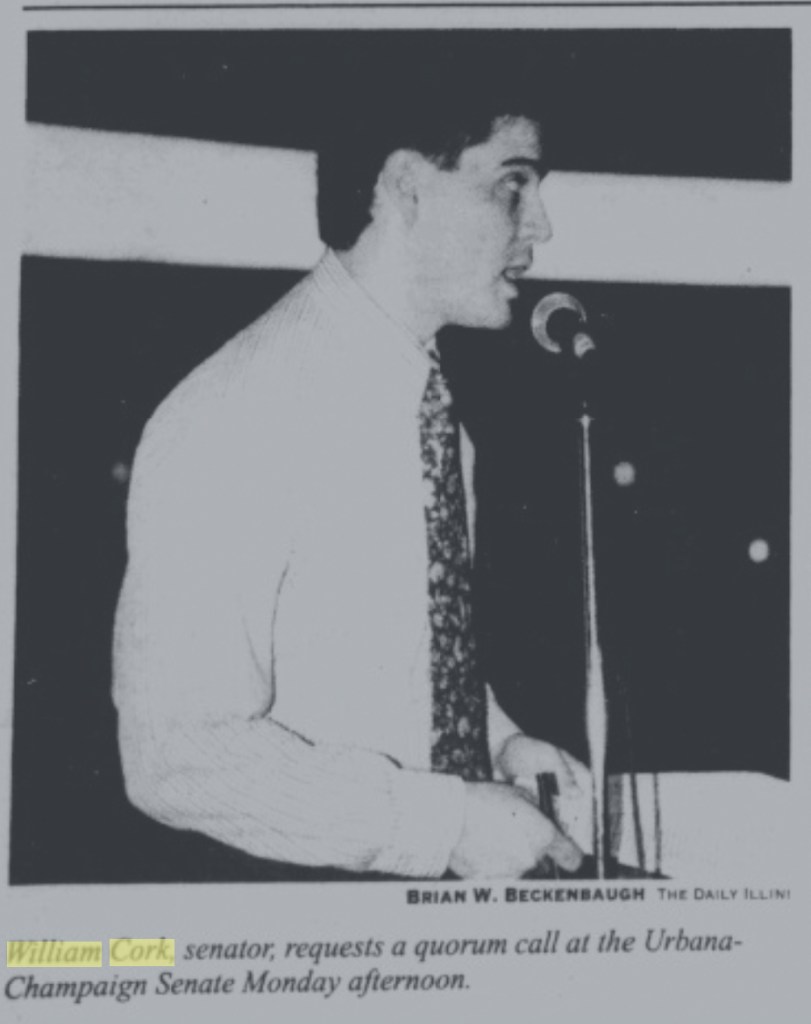
As I reflect on Charlie’s life, I cannot help but reflect also on my own journey, and on the journey of America itself over the last thirty years. I remember the early 1990s, when I was a student at the University of Illinois. I served on the Student Faculty Senate in 1992, back when political correctness was still in its infancy. We were told that “speech codes” were necessary, that “offensive” words or phrases had to be eradicated. I fought those codes tooth and nail.
Charlie lived his whole career in that world. And while I do not agree with every phrase he uttered, I do sympathize with the struggle he faced: to speak freely in a society that punishes free speech. That is why we mourn today — not simply the passing of a man, but the ongoing loss of civil discourse in America.
When I enlisted in the Marine Corps, I swore an oath to support and defend the Constitution of the United States against all enemies, foreign and domestic. That oath did not expire when I hung up the uniform. It is etched in my heart, as enduring as the marriage vows I made to my wife more than four decades ago.
The Corps taught me discipline, loyalty, sacrifice. It taught me to value the man next to me — his courage, his effort, his willingness to bleed and sweat for something greater than himself. It did not teach me to ask where he was born, what color his skin was, or how he voted. It taught me to recognize him as a fellow Marine, a fellow American.
After my service, I completed university. I built a life. I worked, I raised children, I sent them to schools where I expected them to be taught how to think, not what to think. I raised them to love their country, to argue passionately, to stand up when the anthem played, and to bow their heads when prayers were said.
But somewhere along the way, I watched this country drift. In the early 1990s, I was at the University of Illinois, where the battles of today were already being sketched in miniature. Words were being outlawed, ideas labeled “unsafe.” I remember the smugness of the bureaucrats and professors who insisted that “free speech” was just a cover for bigotry. I fought that, not because I wanted to offend, but because I understood — as every thinking person understands — that when you silence speech, you enslave thought.
And then one day, in a graduate level class on the history of environmentalism (it was all that was available as an elective), I used the word “mankind” in a sentence. The professor stopped me cold. He said it was “sexist” and a form of “misogyny.” I laughed, because I thought he was joking. He wasn’t. He told me to leave the class. I left and never returned.
That moment, burned into my memory, was a harbinger of what was coming: a world where speech codes metastasized into HR departments, where political correctness evolved into DEI, where tolerance was redefined to mean enforced conformity.
Charlie Kirk was born into that very world — around the same time my two sons were born into it — and he made it his mission to push back. His style was not my own, yet I recognized in him the same fire I once carried into the UIUC Auditorium chambers at Illinois, pounding the table and insisting that the right to speak be preserved.
Charlie Kirk was a sharp mind and a compelling orator, but he was not the kind of polished intellectual adorned with a Harvard degree or a Wall Street pedigree. In fact, he sometimes stumbled in the rarified air of debates at places like Oxford. Yet that, paradoxically, was his strength. He was authentic. He was self-taught, an autodidact who never hid the rough edges. He was a husband, a father, and a kid from Illinois, like me, who rose from the ground up, determined that neither universities, nor corporations, nor bureaucrats would dictate what could be said in America — or who was allowed to say it.

He founded Turning Point USA with little more than grit and determination. He built an organization that gave young conservatives a voice, often in hostile environments. He showed up on campuses where students were shouted down, jeered, sometimes even threatened — and he spoke anyway.
You didn’t have to agree with him to respect that, and many of his opponents did.
Too often in our country, people measure worth by credentials. “Where did you go to school?” “What degrees do you hold?” “What committees did you serve on?” But Charlie measured worth differently: by courage, by persistence, by willingness to debate. He wasn’t always right, but he was always there.
And he was unafraid of confrontation. In an age when people retreat to safe spaces, Charlie ran toward the fight. He wasn’t subtle, and sometimes his words were sharp-edged. But that was the point: he wanted to spark discussion, to jolt people out of their slumber.
In that sense, Charlie was a warrior of speech. I will not elevate him to martyrdom — that belongs to churches and saints — but I will say this: America is poorer without him. For every Charlie Kirk who dares to raise his voice, there are a hundred others who bite their tongues in silence, afraid of the cost of speaking freely. My prayer is that his passing will not be in vain, but that it might shift those odds, giving courage to more voices to rise.
When I was young, America was a place where neighbors argued across the fence. They argued about taxes, about civil rights, about foreign wars, about unions, about religion. But they also shared beers after work, mowed each other’s lawns when one was sick, watched each other’s kids play outside when one parent couldn’t and came together on the Fourth of July to watch fireworks. Debate was not war; it was part of citizenship.
But something has changed. Over the last thirty years, the very fabric of civil discourse has unraveled. Political correctness, once a punchline, has become doctrine. DEI has institutionalized division, teaching people to view each other not as individuals but as categories: oppressed or oppressor, privileged or marginalized. Multiculturalism, once sold as a celebration of diversity, has devolved into the rejection of a shared national identity.
I have lived long enough to see conversations shrink, not expand. Today, people are afraid to speak at work, afraid to post online, afraid even to talk at the dinner table. Words that once sparked debate now end careers. Humor is censored, curiosity punished, dissent demonized.
I know this not only from observation but from bitter experience. In 2021, while serving at the Mississippi Development Authority, I wrote a simple Facebook post criticizing a Biden Administration proposed policy on childcare subsidies. My argument was plain: government preference for subsidizing institutional childcare might benefit businesses, but it distorted the market for families who chose to raise their children at home. I wrote that the traditional, two-parent, biological, conflict free family ought to be recognized as the best environment to raise children — not dismissed or penalized in favor of arrangements that placed career or lifestyle above parenting.
That single post was treated as a crime. My colleagues filed complaints. I was directed to take the post down. The State Personnel Board launched an investigation. I had done nothing illegal, but to keep my job, I was compelled to sit through twelve hours of “sensitivity training.” I agreed, not out of contrition or because I was worried about losing my job, but because I wanted to see firsthand what the one-on-one counseling would say and what they were putting other people through. What I discovered was exactly what I expected: a pile of jargon, ideological dogma dressed up as sensitivity, and no serious engagement with the substance of my original point.
This, I say plainly, is un-American. Because America was built not on conformity but on conflict — the healthy conflict of ideas, the robust clash of opinions, the marketplace of thought. To shut that down is not to progress; it is to regress into tyranny.
Charlie fought against that. Again, I do not claim his every word was perfect. Just as I’m sure not every word I have said or will say is perfect. But I sympathize with his battle, because it is my battle too.
To be an American is not to be perfect. It is not to be free from sin or error. To be an American is to live in a country where you are allowed to stumble, to fall, to speak, to argue, to rise again. It is to live in a nation forged by liberty and bound together by shared principles, not by tribal bloodlines.
Being American means believing in the right of the individual — to speak his mind, to worship his God, to defend his family, to pursue his dreams. It means respecting the Constitution, not as an old piece of paper, but as a living covenant with those who came before us and those who will come after us.
Being American means standing for the flag, not because your country is flawless, but because it is yours. It means loving your neighbor, even if he votes differently. It means understanding that freedom comes with responsibility, and that liberty requires courage.
To be un-American is the opposite. It is to demand conformity and to silence dissent, to divide people into categories and identities rather than recognize them as individuals. It is to desecrate the flag, to mock the very idea of nationhood, and to brand free speech itself as dangerous. It is to erode the foundations of self-government by surrendering authority to bureaucrats, to ideologues, or to foreign interests — whether they come from Ukraine, Israel, Russia, or any other land that is not our own
I have stood against un-American forces all my life — on foreign soil as a Marine, and on our own soil as a citizen. Charlie Kirk stood against them as well, in his own way. For that, I honor him.
So where do we go from here? How do we restore civil discourse in America?
First, we must reclaim education. Schools must teach history honestly, literature broadly, and debate openly. They must stop policing words and start training minds. If a student uses the word “mankind,” the response should be a discussion, not an expulsion.
Second, we must model courage. Children learn not from slogans but from example. If we hide our opinions, they will learn to hide theirs. If we speak respectfully but firmly, they will learn to do the same.
Third, we must reject the false idols of DEI and multiculturalism. Diversity has value only when it is rooted in unity. Without a shared American identity, diversity becomes division. We must return to the idea that we are Americans first — from many backgrounds, yes, but united under one flag.
Fourth, we must cultivate humility. Debate is not about destroying your opponent but sharpening your own understanding. Too many today treat politics as war, not conversation. We must relearn the art of listening, of admitting when we are wrong, of finding common ground.
Fifth, we must defend free speech relentlessly. This means standing up in workplaces, in schools, in communities, and refusing to be silenced. It means protecting even speech we dislike, because the alternative is no speech at all.
If we do these things, we can honor Charlie Kirk not by idolizing him, but by carrying forward the spirit of his fight.
Charlie Kirk is gone. A voice, sometimes sharp, sometimes brash, always bold, has been silenced by an assassin’s bullet. But in his life, he reminded us of something too easily forgotten; that speech matters, that debate matters, that courage matters.
I write these words as a Marine, a father, a husband, a grandfather, and I mourn his passing. But I also mourn what America has lost over these past three decades: the ability to argue without hatred, to disagree without destruction, to be citizens together in the great experiment of liberty.
Let us not waste this moment. Let us not reduce Charlie to a slogan or a symbol. Let us instead take from his life a challenge: to speak honestly, to listen openly, to live boldly as Americans.
For in the end, that is what matters. Not whether you agreed with Charlie Kirk, but whether you will carry forward the fight for freedom of speech, freedom of thought, and the right of a free people to govern themselves.
That is what it means to be American. That is what Charlie, in his own imperfect way, stood for. And that is what we must continue to defend — for our children, for our grandchildren, and for the generations yet unborn.
Rest in peace, Charlie.
Howard Lutnick: A Vision for America’s Economic Renaissance
By William Cork
In a candid and wide-ranging conversation on the “All-In” podcast, Commerce Secretary Howard Lutnick shared his insights on America’s economic challenges and his bold strategies to address them. Drawing from his extensive experience in finance and his close relationship with President Trump, Lutnick outlined a vision aimed at revitalizing the U.S. economy, restoring fiscal discipline, and reasserting America’s position on the global stage.
From Wall Street to Washington
Howard Lutnick’s journey from the CEO of Cantor Fitzgerald to the U.S. Secretary of Commerce is marked by resilience and determination. Reflecting on his transition into public service, he remarked:
“I never imagined I’d be in this role, but when the President asked, I knew I had to step up for the country.”
His longstanding relationship with President Trump, spanning over three decades, has been instrumental in shaping his approach to governance.
“We’ve had countless discussions about America’s potential and the need for strong leadership to realize it.”
Balancing the Budget: A $2 Trillion Challenge
One of Lutnick’s primary objectives is to address the ballooning federal deficit. He emphasized the urgency of the situation:
“We’re staring down a $2 trillion deficit. It’s unsustainable, and action is imperative.”
To tackle this, Lutnick proposes a dual strategy: cutting unnecessary expenditures and increasing revenues through innovative programs.
“We’re identifying areas where we can trim the fat without compromising essential services. Simultaneously, we’re introducing initiatives to boost revenue.”
Introducing the ‘Trump Card’ Visa Program
A cornerstone of Lutnick’s revenue-generating strategy is the introduction of the “Trump Card” visa program. This initiative aims to attract high-net-worth individuals to invest in the U.S. economy.
“The ‘Trump Card’ offers a pathway for affluent individuals to contribute to our economy, bringing in substantial revenue and fostering job creation.”
By setting a $5 million price tag for this visa, the program is projected to generate significant funds that can be directed toward infrastructure and other critical areas.
Reforming GDP Calculations
Lutnick also highlighted the need to modernize how the U.S. calculates its Gross Domestic Product (GDP). He pointed out discrepancies in current methodologies:
“Our GDP calculations don’t accurately reflect the digital economy’s contributions. We need metrics that capture the true state of our economic health.”
By refining these measurements, Lutnick believes policymakers can make more informed decisions that better serve the nation’s interests.
Tariffs: Protecting American Interests
A significant portion of the discussion centered on trade policies, particularly the administration’s stance on tariffs. Lutnick defended the use of tariffs as a tool to protect American industries:
“For too long, other nations have taken advantage of our open markets. Tariffs level the playing field and ensure fair competition.”
He acknowledged the short-term challenges but emphasized the long-term benefits:
“There might be initial disruptions, but the end goal is a robust, self-reliant American economy.”
Embracing Technological Advancements
Lutnick is a proponent of integrating technology into government operations to enhance efficiency and transparency. He discussed plans to overhaul outdated systems:
“We’re investing in modernizing our digital infrastructure, ensuring that government services are accessible and efficient.”
He also touched upon the potential of artificial intelligence in streamlining administrative processes:
“AI can revolutionize how we manage resources, from automating routine tasks to analyzing complex data for better decision-making.”
Establishing a Sovereign Wealth Fund
Drawing inspiration from countries like Norway, Lutnick proposed the creation of a U.S. Sovereign Wealth Fund. This fund would invest in various assets to generate returns that support national programs.
“A Sovereign Wealth Fund can provide a steady income stream, reducing our reliance on debt and ensuring financial stability for future generations.”
He emphasized the importance of prudent management and transparency in overseeing such a fund.
Personal Reflections and Commitment
Throughout the interview, Lutnick’s personal experiences, particularly the tragic loss of colleagues during the 9/11 attacks, underscored his dedication to public service. He shared:
“The events of 9/11 profoundly impacted me. They reinforced the importance of resilience and the need to contribute meaningfully to our nation’s future.”
His commitment to philanthropy and rebuilding efforts post-9/11 demonstrates a deep-seated desire to make a positive difference.
Conclusion: Charting a New Course for America
Howard Lutnick’s vision for America’s economic future is both ambitious and grounded in practical strategies. By addressing fiscal challenges head-on, embracing technological advancements, and implementing innovative programs, he aims to steer the nation toward sustained prosperity.
His insights from the “All-In” podcast offer a glimpse into the administration’s broader economic agenda, reflecting a commitment to revitalizing America’s standing in the global economy.
Note: This blog post is based on the “Howard Lutnick | All-In DC” interview. For a more in-depth understanding, you can watch the full interview here.
Why Mississippi Is Winning — And What It Takes to Keep It Going
By William Cork
It’s an exciting time to be doing economic development in Mississippi.
We’re not just seeing growth — we’re seeing the kind of record-breaking momentum that only happens when people get aligned, work a plan, and follow through. Since 2020, under Governor Reeves’ leadership, we’ve landed over $31 billion in new capital investment and more than 22,000 jobs. And we’ve done it with a smaller team and a smarter approach.
This isn’t about headlines or photo ops. It’s about building something real — something that lasts — for the people of Mississippi.
A few months ago, I sat down with Damon Tipton for his podcast and had a wide ranging interview. If you listen to it (it’s linked at the end of this post) you’ll learn a lot about what Mississippi is doing to position us for the future.
Let me provide a quick summary of the key points of the interview, and give you a walk through what I believe is driving our success, and what it’ll take to keep moving forward.
We Don’t Incentivize Hope — We Incentivize Performance
We’ve changed how Mississippi does business. We used to write checks up front and hope it all worked out. But if the project didn’t materialize, we were stuck trying to claw that money back from companies that were already failing.
Now, we do it differently.
With tools like the Mississippi Flexible Incentive Tax Credit, we tie performance to benefits. Companies don’t get incentives until they’ve met their commitments. Just like a contractor’s draw — you perform, you get paid. It’s conservative, it’s smart, and it protects the taxpayer.
Speed, Risk, and Money — Plus the Intangibles
When a company is evaluating where to put a factory or a data center, they’re asking three things: How fast can I move? What’s the risk to my business? What’s it going to cost?
Mississippi has learned how to answer those questions well.
But there’s a fourth element that gets overlooked: the intangibles. A lot of states can check the same boxes we do. But companies are also looking at culture, at values, at brand. They want to know: If I tie my brand to this state, what does it say about me?
We had to confront that head-on with the old state flag. Nobody could quantify how many deals we lost because of it, but we all knew it was an issue. Now, with a flag that reflects the values of our people, we’re no longer starting conversations with a disadvantage.
This Is About People
When we cut a ribbon and I see workers standing there in their uniforms — ready to go to work, with a wage that supports a family and a future — that’s why I do this job.
I’ve been in economic development for over 30 years. I’ve worked projects from the local level to the national level. Nothing compares to the run we’ve had over the last five years. And nothing compares to the reward of seeing Mississippians thrive because we landed a company in their town.
This job is about people. It always has been.
Mississippi Is Affordable — But We’re Not Cheap
Too often, people mistake affordability for being low-quality or low-wage. That’s not the case here.
We’re affordable — for both companies and workers — but we’re not racing to the bottom. The average wage for the manufacturing jobs we’ve brought in is around $60,000 a year. These are family-sustaining jobs with real upward mobility.
I don’t want us competing to be the cheapest. I want us to be competitive — on value, on speed, on workforce, and on outcomes.
Why Net Export Income Is the Whole Ballgame
One of the most important things we think about at MDA is what I call net export income.
If we’re going to grow our economy, we have to bring money into Mississippi — not just move it around within the state (which is also a good thing). That’s why we don’t typically incentivize retail or restaurants. Those businesses are important and they generate a multiplier effect, but our primary target is attracting new dollars to the state.
When Nissan builds cars here and sells them globally, that creates net export income. When the federal government funds military contracts and R&D in Mississippi, that’s money we’ve pulled in from across the country.
And when a tourist comes here and spends their dollars — we’re exporting our experience and importing their money. That’s how you grow a state economy.
The Tech Boom Is Real — and We’re Ready for It
Our recent wave of hyperscale data center announcements didn’t happen by accident. We’ve built out fiber infrastructure, we’ve got abundant power and water, and we’ve prepared sites in advance.
We’ve also invested in workforce — from construction and HVAC to cybersecurity and AI.
We’re not just chasing the leaves and ornaments of a tech ecosystem. We’re planting the roots and growing the trunk. When you get that right, the rest follows.
Immigration and Workforce: A Pragmatic, Human Approach
I served in the Marine Corps. As a military policeman at Camp Pendleton, I personally apprehended hundreds of undocumented migrants. I’ve seen firsthand what it looks like — scared families, children, people just trying to find a better life.
At the same time, I believe in law and order. We need to secure the border. We need to enforce our laws. But we also need to acknowledge the humanity behind the issue and look for common-sense solutions.
We’ve got around 42,000 working-age Mississippians not in the labor force today. We need to figure out how to re-engage them — not grow welfare, but grow opportunity.
Eliminating the Income Tax Is the Right Move
Governor Reeves has made it clear: he wants Mississippi to eliminate its personal income tax. I agree.
Taxing labor is the wrong way to grow an economy. When you tax something, you discourage it. That’s Economics 101.
States like Florida, Texas, and Tennessee have shown that you can eliminate income tax and still grow — in fact, they’re growing faster. If we want to attract high-net-worth individuals and business owners, this is a smart play.
Yes, we’ll need to be smart about the transition. But long-term, the benefits outweigh the risks.
If You Want to Win, You’ve Got to Show Up
I tell communities all over the state: you can win something — but only if you’re aligned, prepared, and committed.
Amazon in Madison County, Aluminum Dynamics in Columbus, Compass in Meridian — none of those projects happened overnight. They were years in the making. Some of them started with a water line to a piece of empty land.
The state will meet you halfway. But we can’t do it for you. If you’re fighting among yourselves or waiting for someone else to act, you’re not going to see results.
Get organized. Make a plan. Stick to it. That’s how we win.
Mississippi is on a run right now. The stars have aligned — and we’ve worked hard to make it happen. We’ve got more work ahead, but the mission hasn’t changed.
We’re here to serve. We’re here to grow. And we’re here to make this state everything we know it can be — for every worker, every community, every business.
Mississippi has momentum. This is Mississippi’s time.
Watch the full one-hour interview here where we go into these concepts in detail and much more!!
Mississippi vs. Britain: A Tale of Two Economies
By William Cork
It might come as a surprise to many—especially across the Atlantic—that Mississippi, long labeled “America’s poorest state,” now enjoys a higher per capita GDP than the United Kingdom. In a recent conversation hosted by the Institute of Economic Affairs, Douglas Carswell, President & CEO of the Mississippi Center for Public Policy and former British MP, laid out a compelling case for how Mississippi’s embrace of economic freedom is yielding results that Britain would do well to learn from.
“People in Britain will be shocked to hear that Mississippi is now more prosperous than the UK,” Carswell says. “But that’s the truth. And the reason isn’t complicated—it’s about the choices we’ve made.”
As someone deeply engaged in Mississippi’s economic development and policy planning, I found Carswell’s argument both refreshing and instructive. Mississippi has become a test case for how targeted policy changes—focused on tax reform, labor deregulation, and education innovation—can unlock growth in even the most economically disadvantaged regions. And yes, it’s working.
The first point Carswell underscores is tax reform. “We’ve passed legislation that will completely eliminate the state income tax by 2037,” he explains. “We’re moving to a flat-rate income tax, and eventually we’ll have none. That sends a clear signal to businesses and workers.”
This kind of tax clarity makes a difference. It not only makes the state more attractive for new investment, but it also allows people to keep more of what they earn. Compare that with the UK, where the tax burden is at a 70-year high. Carswell doesn’t mince words: “The UK is stuck in a 20th-century model. There’s no incentive to produce, to invest, or to innovate.”
Mississippi, by contrast, is leaning into competitiveness.
Second, Carswell praises Mississippi’s aggressive rollback of occupational licensing.
“We’ve removed a lot of unnecessary regulation that prevents people from working,” he says. “You shouldn’t need a state license to be a hair braider or a florist.”
These are reforms that go straight to the heart of opportunity creation. In Britain, the bureaucracy is often stifling—not just for entrepreneurs but for anyone trying to get ahead. Carswell’s experience in both systems makes the comparison stark.
“In the UK, you have bureaucrats and technocrats who think they know better. In Mississippi, we’re putting power back in the hands of individuals.”
Another area where Mississippi pulls ahead is energy policy. By avoiding green mandates that drive up energy costs in Europe, the state has kept energy prices low—and stable.
“We’re not hostile to renewables,” Carswell clarifies, “but we’re not going to impoverish people to signal virtue. Low energy prices mean families and businesses can thrive.”
That one point alone puts Mississippi ahead of many Western economies that have overburdened themselves with regulations in the name of environmental responsibility but have failed to deliver affordable, sustainable energy in return. Governor Reeves’ recently announced Energy Power Play initiative will elevate this idea to a point of action.
One of the most surprising elements of Mississippi’s success story is education. Despite its reputation, Mississippi is now leading the nation in early literacy gains. Carswell attributes this to a focus on phonics-based reading instruction and real accountability.
“We said, if a child can’t read at grade level by third grade, they don’t advance. That’s tough love, but it works.”
Mississippi’s education reforms don’t stop at literacy. The state is part of a growing movement in the U.S. for school choice. “Fifteen or sixteen states now have universal school choice,” Carswell notes. “Parents can take their child’s education dollars and go wherever they want—public, private, or charter.”
This is a revolution in accountability and empowerment. And again, it contrasts sharply with the UK’s centralized, bureaucratized education system.
“You want better schools? Give parents the power to walk away from the bad ones,” he says.
Carswell is clear-eyed about the causes of Britain’s decline. Despite voting for Brexit and electing a series of nominally conservative governments, the UK has drifted further into technocratic inertia.
“Britain hasn’t really had a conservative government in 28 years,” he says. “We’ve had Blairism dressed up in different colors.”
The result? Ballooning welfare rolls, housing shortages due to planning regulations, and a culture of dependency.
“The UK is a country where the state is everywhere, and the individual is nowhere,” Carswell remarks. “That’s not how you build prosperity.”
He calls for radical reform: cutting public spending, abolishing the Equality Act and Human Rights Act, and upending the planning system to free up housing supply.
“This isn’t about left or right anymore. It’s about whether we believe in the individual or the state.”
For those of us working in economic development, Carswell’s message is clear: pro-growth policies work when they empower people. Mississippi didn’t wait for Washington to give it permission to modernize. It made bold decisions at the state level—decisions that would be politically unthinkable in much of Europe. Many of Carswell’s ideas should be made manifest in Mississippi and with a supermajority of conservatives in the legislature and in all statewide offices, there is no excuse for not getting it done.
And while the UK is a country with enormous strengths—world-class institutions, a deep talent pool, and a proud industrial tradition—it is being held back by a mindset that prioritizes control over competition. Mississippi should not make the same mistakes.
“Mississippi doesn’t have London’s history, wealth, or institutions,” Carswell says. “But we’ve got something powerful: a belief in the dignity of work and the importance of economic freedom.”
That belief drives what I do in economic development here in Mississippi and it’s a belief that’s paying off.
Economic development is a choice. Mississippi chose reform, resilience, and risk. Britain chose stagnation, safety nets, and status quo.
One is rising. The other is falling behind. It’s wonderful that a Brit is reminding Mississippians that while we have work to do, we have momentum and this is our time.
Watch the whole interview here:
 Bill Cork